Generic selectors
Exact matches only
Search in title
Search in content
Post Type Selectors
Generic selectors
Exact matches only
Search in title
Search in content
Post Type Selectors

Crystalline Waterproofing – Hydronil: A Practical Long-term Concrete Protection

Crystalline waterproofing

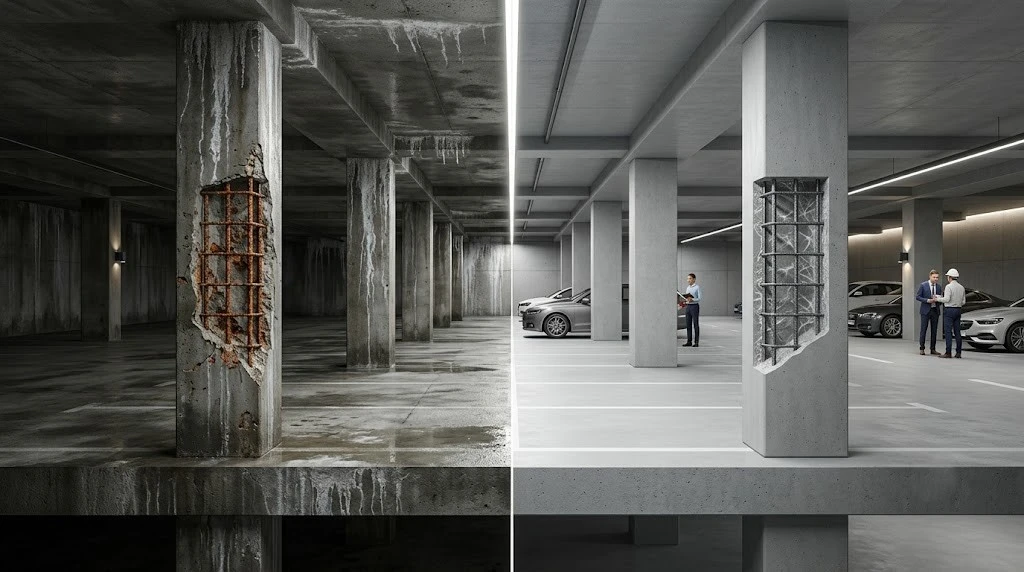
In the majority of construction projects, waterproofing is usually considered as a finishing task. A lining or a membrane is usually coated over and the work is finished. These systems might work well in the short run but are unable to work with time. Water pressure, structural movement, adhesion and peeling issues ultimately makes them less effective, where crystalline waterproofing will be a more reliable alternative here.

Hydronil crystalline waterproofing solutions do not just provide surface protection but rather operates internally within the concrete for long-lasting and reliable results.

What is Crystalline Waterproofing?

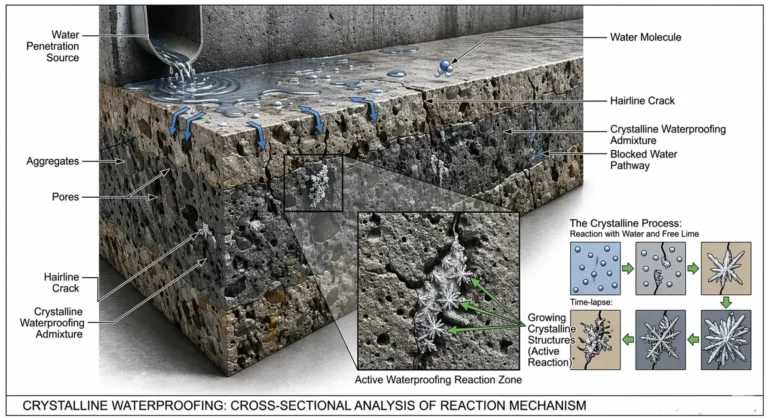
Concrete does not seem porous; however, it does have microscopic pores and capillaries through which water can penetrate gradually. It is among the main causes of the prolonged decay.

Crystalline waterproofing addresses this issue at its root. It reacts with moisture and cementitious materials available in the concrete to create insoluble crystals in these pores and micro-voids. When these crystals grow they block the path through which water flows.

This system does not work as a surface barrier, but instead it enhances the concrete internally.

Why Choose Hydronil for Crystalline Waterproofing?

Hydronil has been designed to work in the real construction environment to deliver durable and long term protection.

Key Advantages

  • Penetrates deep in the concrete matrix.
  • Permanently waterproofs and does not peel or blister.
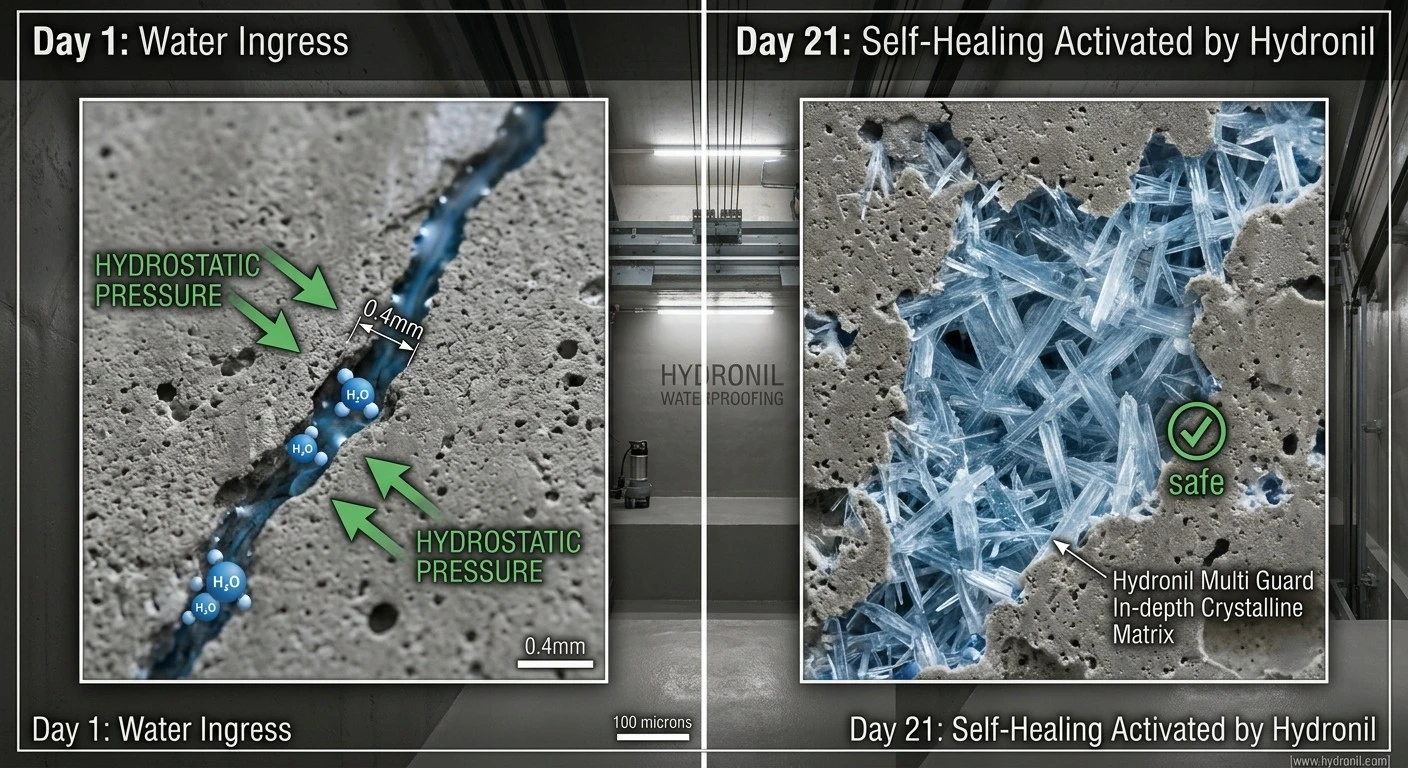
  • Provides self-sealing properties of small cracks.
  • Withstands both positive and negative water pressure
  • Needs little maintenance as compared to membrane systems.
  • Improves the life of the concrete structures.

Reasons why Contractors like Hydronil

Over the past few years, there has been a shift in choice by many contractors to crystalline waterproofing systems especially in buildings that are subjected to constant moisture. This is based on long-term performance, rather than on initial use.

On-site benefits of crytalline waterproofing:

  • No reliance on adhesion on surface.
  • Removes such frequent problems as peeling or delamination.
  • Good on either side of the water pressure.
  • Less maintenance and repair needs.
  • Forms a part of the concrete.

This means fewer callouts and enhanced long-term performance!

Typical Applications

Hydronil crystalline waterproofing can be used on various types of buildings that are subject to water ingress:

  • Basements which are exposed to groundwater.
  • Water tanks and storage buildings.
  • Exposed roof slabs in the rain.
  • Foundations and retaining walls.
  • Pits and wet places.

Overall, internal waterproofing protection can be applied to any building that is exposed to water continously.

A pragmatic approach to Crystalline Waterproofing

Under practical circumstances, systems that have been applied on the surface may be damaged by mechanical forces, environmental factors, or age. Repairing is expensive and disturbing.Hydronil overcomes this drawback by offering internal protection. The waterproofing action in the concrete is still active even in situations where the surface is affected.

Crystalline waterproofing offers a long-term solution for engineers and contractors seeking durable, long-life structures. The waterproofing should not only be able to prevent water leaks but also protect the structure against any future damages.

Where Can Hydronil Be Used?

Hydronil is versatile and suitable for multiple applications, including:

  • Basements and foundation systems
  • Water tanks and reservoirs
  • Roof slabs, terraces, and sundecks
  • Tunnels and underground transit structures
  • Dams, bridges, and flyovers
  • Bathrooms and wet areas

It performs effectively in environments exposed to continuous moisture, hydrostatic pressure, and varying weather conditions, ensuring long-term structural protection.

What Makes Hydronil Stand Out?

Construction sites often present imperfect conditions, including uneven surfaces and prolonged water exposure. Hydronil performs reliably even in such environments.

Since it integrates into the concrete matrix, it does not rely solely on external protection. Even if the surface layer is damaged or exposed, the internal waterproofing continues to function.

This makes it a preferred choice for professionals seeking durability and long-term performance rather than temporary solutions.

Final Thoughts

Selecting the right waterproofing system is about more than just stopping leaks, it’s about preserving the structural integrity of concrete over time.

Hydronil crystalline waterproofing offers a dependable solution by working within the concrete rather than on its surface. This ensures sustained protection, reduced maintenance, and enhanced durability.

For projects requiring strength, reliability, and long service life, Hydronil from Multichem Group represents a smart and practical investment.

A crystalline waterproofing material that penetrates into concrete and reacts with moisture to block pores and capillaries, becoming an integral part of the structure.

Provides long-term resistance against water and chemical ingress. Suitable for damp-proofing and offers a practical, cost-effective waterproofing solution.

Multiguard In-depth Type D (MITD) is a single-component, penetrating cementitious waterproofing material designed to protect concrete and masonry from water and chemical ingress.

Reduces water content by approximately 7–10%, enhances durability, and protects reinforcement steel from chemical attack and corrosion.

Ideal for repairing, surfacing, and waterproofing concrete and masonry. It offers strong resistance to hydrostatic pressure.

A fast-setting powder that, when mixed with water, forms a stiff consistency. It sets within minutes to create an effective waterproof seal and continues to harden in the presence of water.

FAQ

What makes Hydronil crystalline waterproofing different from traditional systems?

Unlike conventional coatings or membranes that remain on the surface, Hydronil works within the concrete. It forms crystals inside pores and capillaries, blocking water pathways and providing long-term, integral protection.

Can Hydronil be used for both new and existing structures?

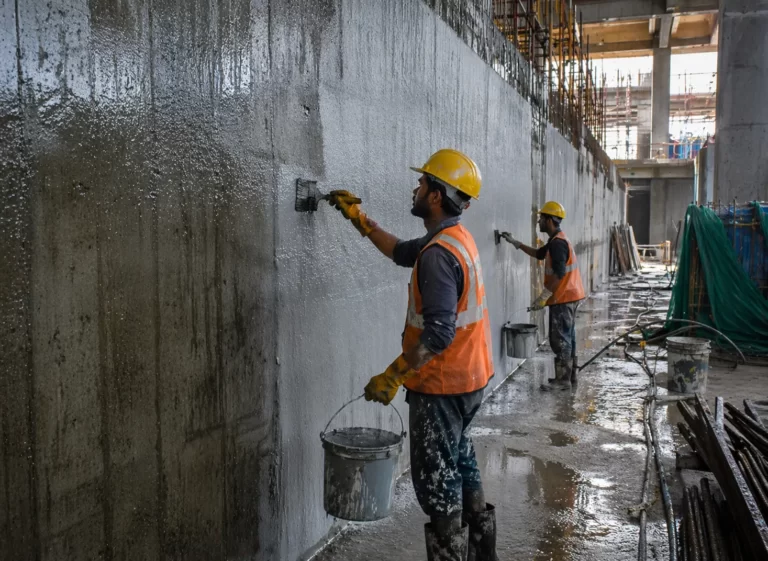
Yes, Hydronil is suitable for new construction as well as existing structures. It can be applied on internal surfaces (negative side) without the need for excavation, making it ideal for retrofit projects.

Does Hydronil help in sealing cracks in concrete?

Hydronil has self-sealing properties for microcracks (typically up to 0.4 mm). When moisture is present, the crystalline reaction reactivates and helps seal fine cracks over time.

Where is Hydronil crystalline waterproofing commonly used?

It is widely used in basements, water tanks, roof slabs, foundations, retaining walls, tunnels, and other areas exposed to continuous moisture or water pressure.

How long does Hydronil waterproofing last?

Since Hydronil becomes part of the concrete structure, its performance typically lasts as long as the concrete itself. It remains active in the presence of moisture and requires minimal maintenance.
Need Help?